Salesforce Leadership: Coaching & Mentoring
Fostering professional growth by guiding a junior designer through the end-to-end product lifecycle of AI-driven commerce features at Salesforce.
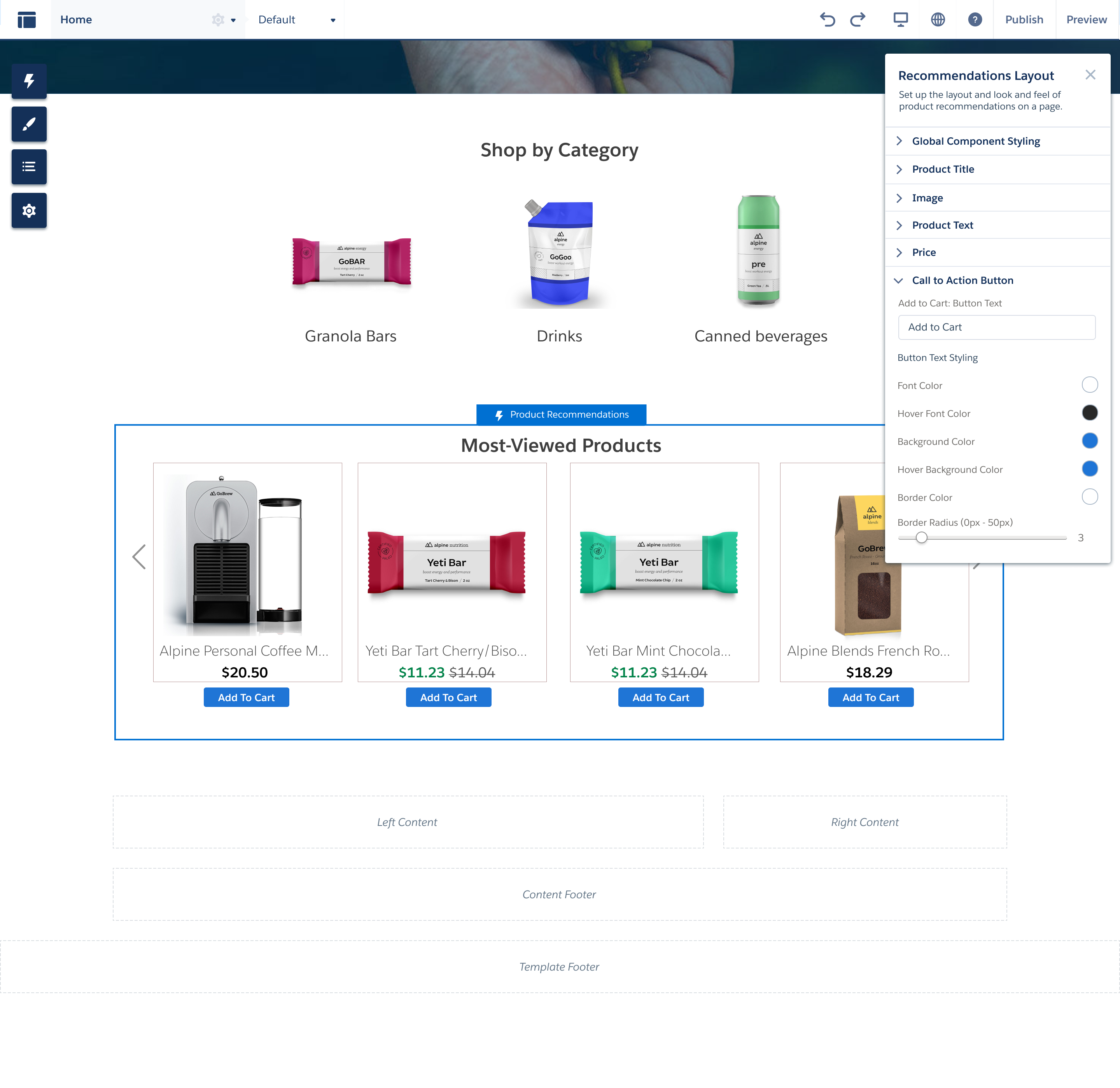
Salesforce Mentoring on Product Recommendations
Problem
A junior designer needed to be onboarded and integrated into a complex ecosystem. My goal was to coach her through the delivery of high-impact features — Einstein Deployment and a Recommendations Component — while letting her take real ownership and learn from real-world project challenges.
How I tackled it
- 01
Onboarding & Observation
Eased the designer into the team and observed her working style during a 4-month release cycle.
- 02
Mentored Execution
Guided the first phase of deployment through cross-functional meetings with PMs and engineers.
- 03
Stretch Initiative
Transitioned her to lead an end-to-end project, including independent user research and customer interviews.
- 04
Empowerment
Watched her take full ownership of project decisions and answer stakeholder questions autonomously.
What we learned
Research for the Recommendations Component meant moving two months ahead of the engineering cycle to run independent user validation. I provided the templates and organized the customer sessions, but Mikaela led the interviews while I took notes. Card sorting and structured talking points revealed users prioritized data control over visual styling.
From insight to roadmap
The strategy was a two-phase mentoring roadmap designed to move from observation to total ownership. Phase one focused on navigating the Salesforce release lifecycle through Einstein Deployment. Phase two — the Recommendations Component — stretched her capabilities by introducing research-driven design decisions and required her to manage the full project ecosystem independently.
Iteration to high-fidelity
Phase 1 — Collaborative Execution
In phase one, design focused on Einstein Deployment — automating personalized recommendations. I introduced her to design system components and coached her through flows and several iterations. I intentionally left space for her to create and even fail, because long-term growth needs both.
Phase 2 — Research-Driven Iteration
In phase two, Mikaela evolved the component by challenging initial assumptions through research. Working alongside PMs and engineers, she pivoted the design from style-heavy editing to data-driven controls. By the end of this phase she had transitioned from a mentored intern to a designer with full project ownership.
What it added up to
The project delivered a research-backed recommendations component and — more importantly — the professional transformation of a junior designer. Mikaela moved from being onboarded to autonomously managing stakeholder relationships and making data-driven decisions that directly improved the customer experience.